

Traveling across time zones to distant places and dealing with jet lag is never fun – even for experienced flight crew that deal with it nearly every week. But over time, we find ways to cope with it. After all, we have no choice.
In fact, as an international airline pilot, I’ve sometimes in a position where I have to switch back and forth between 12 or more time zones as many as 5 times in a week.
The first thing I will tell you is: there is no secret, magical forum that works for everyone exactly the same – jet lag has to do with our own physiology, and nobody, not even flight crew, is able to fully overcome it. That being said, there are ways you can get rid of your jet lag much faster with a few simple tricks.
Recommended read: The Ultimate Guide to Staying Fit and Healthy While Traveling (by a Pilot)
Why does jet lag happen? What is jet lag?
You can thank millions of years of evolution mostly in the outdoors (and without air travel) for your harrowing headache and fatigue. Our bodies have adapted to regulate energy and concentration levels throughout our day to maximize our usefulness. The cycle they use is called the circadian rhythm.
Our bodies establish this rhythm by using clues such as light, food consumption, and exercise to manage hormone secretion (such as adrenaline [energizing] and melatonin [sedative]). They do a great job at this, but are absolutely not adapted to changing time zones at anything more than walking pace.
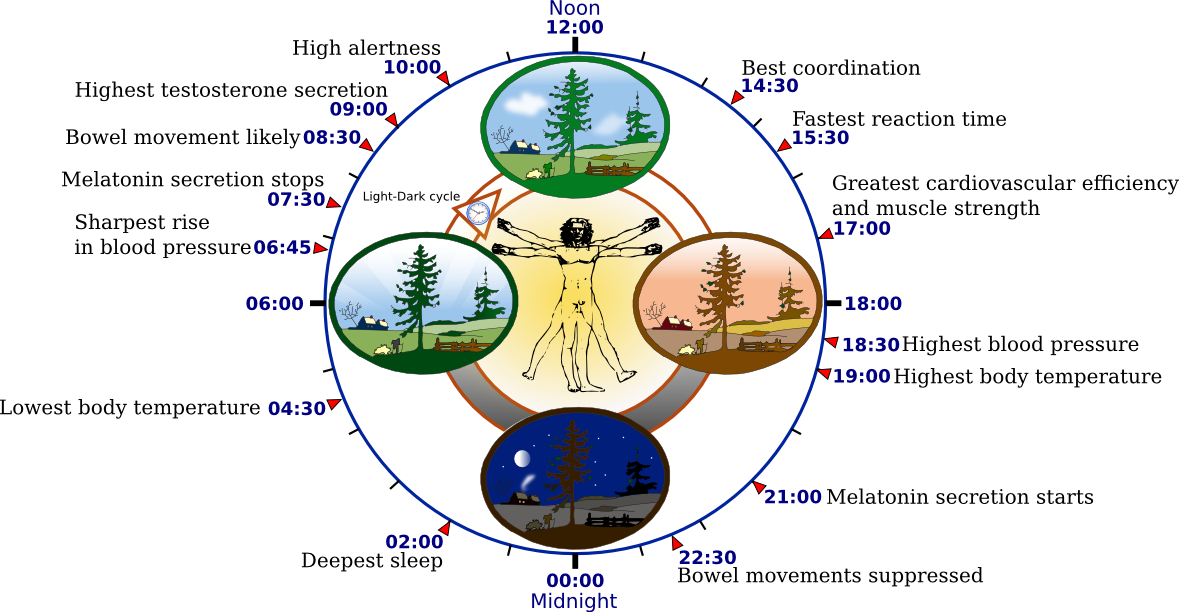
My favorite reading on jet lag and sleep has been Why We Sleep, by Mathew Walker. I've been able to re-access and pivot my own approach to sleeping because of it.
Because of our circadian rhythms, our bodies adapt to the light cycle in our normal time zones, and we’ve never had a reason (before now) to evolve to adapt quickly to new ones.
In fact, your body can only adjust its internal body clock about 1-2 hours per day. That means traveling across 12 time zones could take over 10 days to adapt to!
If That’s True, What Can I Do About Jet Lag?
10 Ways You Can Get Rid of Jet Lag
1. Start adjusting to your new time zone before you even leave.
2. Align your sleep patterns with your future time zone on your flight.
3. Download a jet-lag combatting app.
4. Stay hydrated, before, during, and after flying. But not too hydrated.
5. Get as much daytime exercise as you can – but not within 4 hours of sleeping
6. Adjust your meal times for your destination
7. Go outside
8. Avoid excessively long naps
9. Take melatonin, not sleeping pills
10. Avoid blue light (including your cell phone!) within 2-3 hours of sleeping
Remember those clues I mentioned earlier, the ones that tell your brain how to set up its circadian rhythm? Part of the strategy is controlling those clues to allow your brain to start learning the new time zone. Another part of the strategy is being preventative.
If you’re currently in bed laying in a fetal position, reading this at 3AM at your destination, this part won’t help. In case you’re preparing for a future trip, here’s how you can get ahead:
1. Start adjusting to your new time zone before you even leave.
If you’re traveling from Europe to the US, for example, try going to bed and waking up later before you even travel.
One great way to do this is by using the clock on your phone. Pay attention to the time at your next destination and note if you need to start going to bed earlier or later.
If you have the desire, you can even manually change the time on your phone to match your next time zone. To do this on the iPhone, go to Settings -> General -> Date and Time -> Set Automatically (turn off), then select your new time zone.
2. Align your sleep patterns with your future time zone on your flight.
This is a great time to try and start adapting ahead of time. Set your watch and phone to the new time zone, and adhere to it. You have movies, food, drinks, and maybe some smelly neighbors to keep you awake! Try your best to sleep when it’s nighttime at your destination.
Use the previous tips I mentioned with the clock on your phone to start aligning with your next time zone.
3. Download a jet-lag combatting app.
If you want an app to do all the work for you, one good app to try is Timeshifter.
Travel+Leisure calls it a “Game-changer for frequent fliers”. Timeshifter helps you plan before your trip, it gives you guidance during your trip, and it creates a specific plan for you to maximize your travel while minimizing jet lag impact.

4. Stay hydrated, before, during, and after flying. But not too hydrated.
It’s always important to stay hydrated, or at least that’s what my doctor tells me. But I truly notice the effect not drinking enough water has when I fly long haul. The ill-effects are exemplified.
Air on airplanes is notoriously dry, and staying hydrated will help you stay awake when you want, sleep when you need, and feel better when you land. However, try to time your indulgence of water to not wake you up during the flight while you could be sleeping. I’m all too familiar with how hard it can be to fall back asleep.
Avoid coffee and alcohol in excess as these are diuretics and they will dehydrate you. Not only that, but they can impact your sleep quality drastically.
If you don’t believe me, get yourself an Oura ring and take note of your sleep score on nights you drink alcohol and nights you don’t. You will be in for a shock.
5. Get as much daytime exercise as you can – but not within 4 hours of sleeping
Once you’ve arrived at your destination, the best thing you can do to help clue your brain that it needs to update its circadian rhythm is exercise!
This will set you up for alertness and increase your adrenaline (energizing) during the day, and allow you to be more tired and increase melatonin (sedative) levels at night.
Tip: If you land during the daytime, exercise as soon as you get to the hotel. This is the BEST way to force yourself to exercise without allowing yourself to make any excuses. Trust me, if you lay in bed, it’s game over.

6. Adjust your meal times for your destination
It’s important to eat at the normal times for your new time zone. It’s helps to activate and slow down your digestive system at the proper times. This really clues in your circadian rhythm to its new desired schedule.
Avoid eating heavy meals close to your new bedtime, as this can affect your sleep.
7. Go outside
This might seem simple, archaic, but it’s super important.
Go outside and get fresh air and sunlight. These are both major clues to your brain that it’s daytime and it needs to wake up. Combine this with exercise for maximum effect!
Even on a cloudy day, though not as effective, your brain is still affected by the ambient daylight in a way that helps you adjust to your current time zone.
8. Avoid excessively long naps
Avoid long naps. If you absolutely need to nap in order to stay awake during the day, you MUST set an alarm and avoid sleeping more than an hour. If you sleep any longer, you will ruin your sleep for that night.
That being said, if you flew on a redeye and got little to no sleep, it’s ok to sleep a bit longer. Just don’t sleep your normal amount right here or you’ll get rid of all the adenosine (the compound that makes your brain ‘know’ it’s tired that builds up over time) in your body, and have trouble falling or staying asleep at night.
9. Take melatonin for the first couple nights abroad
For the first couple nights abroad, it can help to take melatonin supplements at night an hour prior to sleeping. Since your body clock is out of sync, your body is not secreting the melatonin hormones at the normal time. Supplementing melatonin while your body adjusts is a fantastic way to ensure better sleep at night.
You can find melatonin on amazon and at most drugstores.
It’s important to note that though sleeping pills do put you to sleep, it is well established that the sleep obtained while under their influence is of poor-quality and is not restorative.
10. Avoid blue light (including your cell phone!) within 2-3 hours of sleeping

This might honestly be the most important trick of all.
Avoid all blue light after sunset. This includes cell phones, TVs, everything. It’s a well-known fact that blue light can disrupt your circadian rhythm (or help maintain an improper one) and keep you up at night.
Additionally, the stress and anxiety our devices induce can keep our brains running wild even after we turn them off. Avoiding using them within 2-3 hours of going to bed will not only signal to your brain that it is now nighttime, it will also allow you to disconnect mentally from daily stress.
One exemption to this is meditation. If you use a meditation app (I love using the app Waking Up), it would probably be more beneficial to meditate using your device right before sleeping. Make sure to use the yellow light feature on your phone, and turn the brightness down as much as possible.
As a pilot, do you have any additional advice on jet lag that I haven’t heard before?
Why, yes. A skill I’ve learned in my trade is carrying fatigue. It may sound counter-productive, but sometimes, purposefully sleeping less and carrying fatigue for parts or all of the day can enable you to sleep the whole next night without waking up. I don’t recommend this unless it’s extremely well-planned. For example:
- You live in Washington DC, which is Eastern Daylight Savings Time (EDT).
- You just got to Japan for work. A meeting is scheduled at 8AM Japan Standard Time tomorrow.
- 8AM JST is 6PM EDT, the time zone your body clock is in.
- This means that sleeping through the night in Japan will feel like sleeping through the day.
- In order to be tired enough to sleep through the night without waking up, you could purposely sleep less on your way to Japan, carry fatigue throughout the day, and force yourself to stay up until 8PM Japan Standard Time.
- It will feel like staying up until 6AM Eastern Daylight Savings time before finally going to bed. Just like your college days!
- Make sure to avoid caffeine after noon – otherwise you may have trouble falling asleep at night. Likewise, do NOT drink too much alcohol, as this will wake you up in the middle of the night.
As you can see, carrying fatigue serves especially well with a planned schedule, such as with meetings or work. You need to target to be fatigued during your intended sleeping hours, even if they are during your normal daytime. Again, this should be used out of necessity only, and is probably not great for your health. I wouldn’t do this on a consistent basis if you don’t have to.
Related: Tested by a Pilot: The Emirates A380 Business Class Experience (DXB-ICN)
I’ve tried everything. I just can’t get rid of the jet lag.
Jet lag affects everyone differently – depending on your genetics, your time zone, direction of travel, stress levels, age, etc. For some people, it will just take time to get used to the new time zone.
Most people can only fully update their circadian rhythm 1-2 hours a day. If you fly to the other side of the world, it could take a full week to adjust to the new time zone. Our bodies may be great, but they are certainly not perfect. Respect your body, and be patient with it.
Jet lag takes time (pun intended).
Hopefully these tricks, almost all universally used by flight crew around the world, will make some impact on your adjustment – and your sleep.

2 replies on “Jet Lag: 10 Tricks Pilots Use to Get Rid of it Fast”
Thank you for the tips ! Great content 😍
My pleasure! Thank you so much for the compliment!